Chesterfield Clerk of Court Office manages official court records, legal filings, and administrative paperwork for county court cases. It functions as a central recordkeeping authority within the local judicial system and handles civil, criminal, and probate case documentation. Chesterfield Clerk of Court Office serves public users, attorneys, and government agencies by keeping court data organized and updated. It processes filings, maintains docket records, and stores judgments in a structured system. This office also supports legal transparency by preserving accurate case history and ensuring all court-related documents remain properly recorded within Chesterfield County judicial operations.
Chesterfield Clerk of Court Office operates as a core administrative unit within Chesterfield Clerk of Court Office and supports the smooth functioning of court procedures across multiple case types. It handles case initiation paperwork, updates hearing records, and maintains final judgment archives for public and legal reference. The office also processes certified copies, filing requests, and case verification tasks for users who need official court information. This system helps attorneys, residents, and agencies stay informed about case progress and legal status updates. It organizes court dockets, filing entries, and record storage in a consistent structure, which supports efficient retrieval of legal data when required for civil disputes, criminal matters, or probate proceedings in Chesterfield County.
Current Clerk of Court and its Responsibilities
The clerk office chesterfield operates under a structured legal system, where the Clerk of Court acts as the chief administrator for court records, filings, and judicial documentation. The current Clerk of Court Amanda L. Pohl oversees all administrative court operations and record management within Chesterfield Clerk of Court Office of Chesterfield County Court. This role includes supervision of case documentation, docket tracking, and coordination between judges, attorneys, and the public. The office ensures that all legal records remain accurate, properly stored, and consistent with county court procedures for civil, criminal, and administrative matters.
Core Responsibilities of the Clerk of Court Office
The responsibilities handled by the Clerk of Court Office cover a wide range of judicial and administrative functions that support smooth court operations. These duties focus on managing official records, maintaining case flow, and handling court-related services for public and legal users. These court clerk services help maintain organized legal documentation across all case types. Every filing goes through structured verification, recording, and indexing before being stored in the county system. This process supports consistency in recordkeeping and allows attorneys, residents, and agencies to rely on accurate case information when required.
- Managing and preserving all official court case records
- Processing civil, criminal, and administrative case filings
- Issuing certified copies of legal documents and judgments
- Maintaining accurate docket schedules for court hearings
- Ensuring documentation flow between judges, attorneys, and the public
- Handling court fees, filing charges, and financial records
- Supervising case indexing and long-term record storage systems
How to Search Court Records in Chesterfield Clerk Office
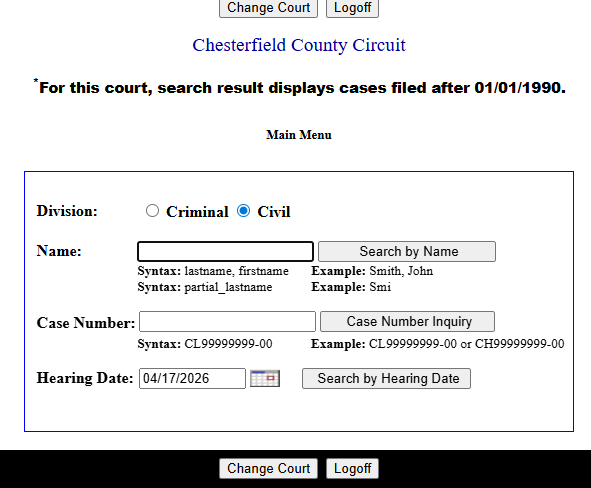
Searching court records through the clerk system follows a structured online process that connects users with Virginia court databases. The official starting point for court-related services is the Virginia Judicial System portal, which links different county courts and case search tools. This system helps users locate civil, criminal, and family case details based on available public record access. It organizes case data through county selection, case type filters, and search identifiers like names or docket numbers.
The official website: https://www.vacourts.gov/
Open the official court website
- Go to Official site: https://www.vacourts.gov/
- This is the main portal for Virginia court services and case-related resources.
Go to “Case Status and Information”
- From the homepage menu, select Case Status and Information section.
- This section provides links to public case search tools and court record systems.
Select Circuit Court and Case Search section
- On the next page, choose Circuit Court Case Information.
- This option leads to court-level record search tools for different counties.
Choose county name
- Select Chesterfield County from the available list of circuit courts.
- This step filters records to the correct jurisdiction.
Start the search process
- Click on the case search option to begin record lookup.
Enter search details
Use one or more of the following:
- Full name of party involved
- Case number or docket number
- Filing date or hearing date range
- Case type (civil, criminal, family, probate)
Review search results
Results may display:
- Case summary
- Hearing dates
- Filing history
- Docket entries
- Case status updates
Check record limitations
Some records may not appear due to legal restrictions such as:
- Sealed cases
- Juvenile matters
- Ongoing investigations
- Privacy-protected documents
Verify details before use
- Confirm spelling, dates, and case numbers for accurate results.
- Small input errors may return unrelated records or incomplete data.
Court Filing, Documentation, and Record Management System
The chesterfield clerk of court office operates a structured system for filing, documentation, and record handling across all case types. It supports both physical and electronic submissions depending on case requirements and court rules. Each document becomes part of an official case record once processed. Within Chesterfield Clerk of Court Office, filings are assigned case numbers, recorded, and stored for legal reference. This system helps maintain organized court records for civil, criminal, and administrative matters while keeping documentation consistent and properly tracked for judicial use. It also supports internal coordination between court departments for accurate case flow. Records are maintained under strict procedural standards. Every filing is linked to a structured indexing system for easy retrieval when required.
Court Document Filing Process
Court document filing follows a step-by-step process that connects legal paperwork to official case records. Each submission is reviewed, processed, and recorded under a unique case identifier for tracking within the court system. This ensures that every legal action is properly documented and stored under the correct jurisdiction. The process also helps reduce errors in case registration and filing history. After these steps, documents are officially entered into the court system. Each record becomes part of a tracked case file used during hearings and legal proceedings. This structured process supports consistency in court operations and helps maintain reliable legal documentation across all case types.
- Prepare legal documents based on case type and court requirements
- Verify jurisdiction and filing rules before submission
- Submit documents to clerk office for processing
- Pay required court fees and charges
- Receive assigned case or docket number
Record Management and Case Documentation
Once documents are filed, they become part of the official court record system managed by the clerk office. This system supports long-term storage, updates, and accurate tracking of case information across all proceedings. It also helps maintain consistency between physical and digital records. Case updates are logged regularly to reflect court actions and decisions. This structure keeps court records organized and supports reliable access for authorized review, hearings, and administrative use. It also helps ensure that historical case data remains intact for future reference. Proper indexing allows quick retrieval of records when needed by court staff or legal representatives.
- Archive case files in digital or physical format
- Update case status and court activity logs
- Maintain long-term record storage systems
- Preserve accuracy of submitted legal documentation
Court Services and Administrative Functions
The clerk office chesterfield delivers essential court services that support daily judicial operations and maintain proper record handling across all case types. These services focus on managing legal documents, processing case filings, and keeping court information organized within the system. Within Chesterfield Clerk of Court Office, administrative work connects directly with civil, criminal, and public record functions to support accurate case tracking. The office also helps maintain consistency in court schedules, filings, and official documentation used by judges, attorneys, and public users. It plays a central role in keeping court procedures structured and properly recorded.
Service Areas
The clerk office provides multiple services that support legal processing, record management, and circuit court coordination. These services help maintain organized documentation and reliable case information across all departments. These services help ensure that court operations remain properly recorded and legally consistent. Each function supports attorneys, law enforcement agencies, and public users by maintaining accurate and updated court information. The system also helps reduce delays in case handling by keeping records structured and easy to reference during legal proceedings.
- Civil case processing and document handling
- Criminal record registration and case updates
- Issuance of certified court copies and orders
- Maintenance of court schedules and hearing calendars
- Public record verification and case lookup support
- Financial processing for filings, fines, and penalties
Online Access and Digital Court Records System
The clerk office chesterfield uses digital platforms to manage court records and improve how legal information is handled and shared. These systems support structured storage of case data, filings, and hearing updates across civil, criminal, and administrative matters. Within Chesterfield Clerk of Court Office, digital tools reduce manual paperwork and help keep records updated in real time. Users can view selected case details, check schedules, and follow filing progress through authorized online systems linked with county court services. This setup supports faster record handling and more organized case information flow. It also reduces delays in retrieving case files. Court staff can update records instantly after hearings or filings.
Electronic Filing and Case Tracking Systems
Digital filing systems allow legal documents to be submitted electronically and recorded into the court database without physical submission delays. This process helps improve accuracy and keeps case records updated across all court departments. These systems support consistent record updates and reduce delays in court documentation handling. They also help attorneys and court staff monitor case progress more efficiently. Case data is linked automatically to docket entries. This improves coordination between different court divisions and reduces manual record entry errors.
- Electronic submission of legal documents
- Digital case tracking for real-time status updates
- Automated updates for hearing schedules
- Secure storage of filed court records
- Faster processing of civil and criminal filings
Online Public Record Access and Information Services
Online court systems also provide limited public access to selected legal records and case details. This helps users review case-related information without visiting the courthouse directly. These services improve convenience for public users while maintaining control over sensitive or restricted records. They support faster information retrieval and reduce the need for in-person court visits. Users can confirm case status anytime through official portals. The system also helps maintain transparency in publicly available court information.
- Access to selected public court records
- Viewing of case summaries and docket entries
- Checking hearing dates and schedules
- Remote access to filing status updates
- Verification of basic case information
Location and Contact Information
The physical clerk office chesterfield serves as a direct point for court-related services, including document submission, record requests, and certified copy issuance. It supports in-person interaction for users who need official case assistance or legal paperwork processing. Within Chesterfield Clerk of Court Office, staff handle court filings, record verification, and public inquiries related to civil, criminal, and administrative cases. This office also functions as a service hub where users can request legal documents, confirm case details, and complete filing requirements under county court procedures. It remains a key access point for formal court services.
Office Details
The office provides structured services for managing court records and supporting legal documentation needs. It operates under county government hours, which may vary based on department schedules and service demand. These services help users complete court-related tasks efficiently. The office also supports document verification and maintains official records for legal use. Staff assist with filing requirements and guide users on record requests within allowed access limits.
- Office Address: 9500 Courthouse Road Chesterfield, VA 23832, United States
- Working hours: Monday–Friday, 8:00 AM – 4:00 PM (county schedule may vary)
- Public access: Walk-in visits and scheduled appointments depending on service type
Contact Methods
The clerk office provides multiple communication channels for public support and case-related inquiries. These options help users reach the office for both general and document-specific needs. These contact methods ensure users can connect with the office in different ways based on urgency and service type. They also help streamline communication between the public and court administration staff for faster response and accurate information handling.
- Phone number: (804) 748-1241
- Fax: (804) 796-5625
- Official website: https://www.chesterfield.gov/1254/Clerk-of-the-Circuit-Court
Frequently Asked Questions
This section addresses commonly encountered user concerns related to court record access, filing procedures, and administrative services within the Chesterfield Clerk of Court system managed by Chesterfield Clerk of Court Office. It helps users understand how court services work, what records are available, and how legal documentation is processed. The answers focus on civil, criminal, and administrative case handling, along with public access rules and filing requirements used in the county court system. It also supports users who need clarity before submitting requests or searching records online. Each response reflects standard procedures followed in Chesterfield County courts. This helps reduce confusion during case-related tasks.
What services are provided by the Chesterfield Clerk of Court Office?
The Chesterfield Clerk of Court Office provides a wide range of legal and administrative services that support court operations. These include case filing, record storage, certified copy issuance, docket management, and hearing schedule maintenance. It also supports attorneys, law enforcement agencies, and public users by maintaining official court documentation and ensuring records remain properly organized for civil, criminal, and administrative matters. These services help maintain consistency across all court divisions. Staff also assist with verifying document requests and record accuracy. Public inquiries are handled through structured service channels.
How can court records be accessed or searched?
Court records can be located using specific case identifiers such as party names, case numbers, or filing dates. Users may review available public information like case summaries, hearing schedules, and docket entries. Some records are restricted due to confidentiality laws or sealed case status. The system is structured to allow accurate case lookup while maintaining legal privacy rules and controlled access to sensitive documents. Search results depend on correct input details and case type. Users may need multiple identifiers for precise results. This helps maintain accuracy in record retrieval.
What is required to file court documents?
Filing court documents requires properly prepared legal paperwork based on case type and jurisdiction. Users must verify filing requirements, submit documents to the clerk office, and pay applicable court fees. After submission, a case or docket number is assigned for tracking purposes. This process ensures each filing is recorded correctly and linked to the appropriate court case within the system. Additional verification may be required for certain legal matters. Incorrect or incomplete documents can delay processing. Proper preparation helps ensure smooth case registration.
Are all court records publicly available?
Not all court records are open for public viewing. Some documents are restricted due to privacy laws, sealed case orders, or ongoing investigations. Public access typically includes case summaries, docket information, and hearing schedules. Sensitive records such as juvenile cases or confidential filings remain protected under legal regulations to maintain privacy and compliance with court rules. Access levels depend on case classification and court decisions. Certain records may require formal requests for release. These restrictions help protect sensitive legal and personal information.
How does the clerk office support the court system?
The clerk office supports the court system by managing official records, maintaining case schedules, and processing legal documentation. It coordinates between judges, attorneys, and the public to ensure accurate case tracking and proper record handling. This administrative role helps maintain order in court operations by keeping filings organized, updating case information, and preserving long-term legal records for reference and judicial use. It also supports daily courtroom workflow through documentation control. Staff ensure data consistency across all court records. This helps maintain reliable court operations over time.